
The Cost of Money Has Left the Station
For the week ended 9/26/26.

Good morning! If you were hoping the recent pause in the bond rout meant borrowing costs were about to behave, the mortgage market has a message for you: 7.03%. That was the average rate on a 30-year fixed mortgage last week, according to Freddie Mac. Anyone who locked in a rate below 3% during the pandemic may now regard that mortgage as a family heirloom.
Consumers are feeling the squeeze. The University of Michigan’s final September sentiment reading improved from its preliminary estimate but still fell from August. More troubling for the Fed, expected inflation over the next year rose to 4.6%, while longer-term expectations edged up to 3.4%.
Stocks managed to shrug it off. U.S. equities gained 1.2% last week and foreign stocks rose 0.4%. Bonds had a less pleasant trip: U.S. bonds fell 0.8%, while real estate declined 1.2%. Through last week, the Bloomberg U.S. Aggregate Bond Index was down 2.3% for the year, compared with a 2.7% gain for cash. So much for being paid to take duration risk.
The pressure is visible in Treasury yields. The 10-year finished Friday around 5.2%, and the 30-year near 5.5%. Higher yields create better opportunities for investors putting new money to work, but they also push down the prices of bonds already in portfolios and raise financing costs across the economy. Traditional fixed income still has a role; income investors may simply need to be more selective about where they take risk.
Speaking of financing costs, Brightline’s parent entities have entered a Chapter 11 restructuring after the privately backed Florida railroad struggled under roughly $5.5 billion in debt. If it gives you comfort; Its trains are still running. Meanwhile, Amtrak reported $3.41 billion in revenue through July of its fiscal year, alongside a $425 million adjusted operating loss and a $1.44 billion net loss. Private rail has creditors to answer to; Amtrak has a somewhat more patient backer. You may know that backer personally – especially around April 15.
Wednesday brings August’s core PCE inflation reading and an updated estimate of second-quarter GDP. Friday brings the September jobs report. My bet is that employment remains reasonably solid, though this week’s data will get the final word.
May your coffee stay warm as the mornings become, thankfully, cooler. Good morning.

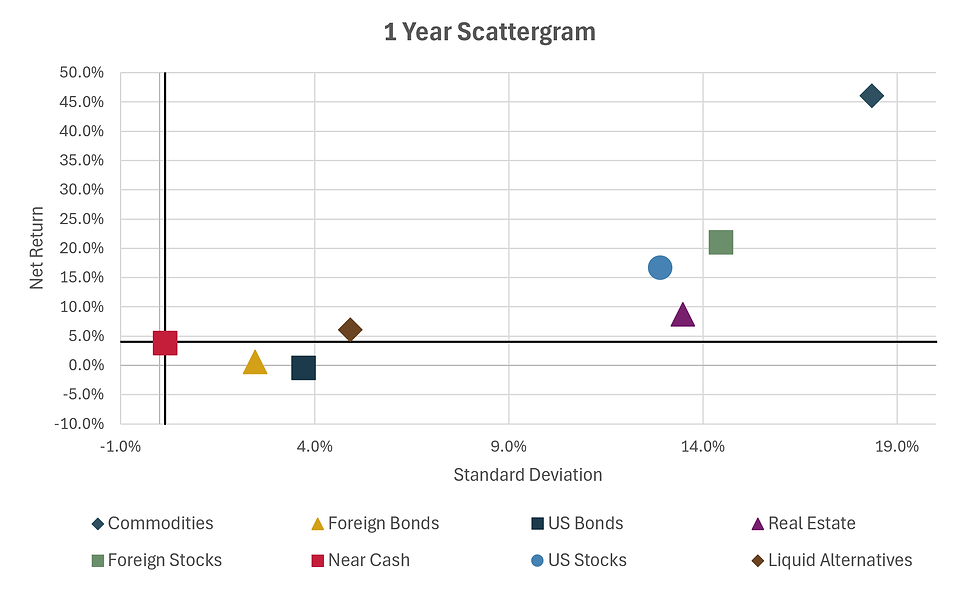

Interesting data point of the week.


Comments